It’s a normal evening after school. You’re doing your homework in a silent room as your phone sits to your right, dark-screened and unblinking. You find yourself distracted, eyes darting to the blank screen constantly, as if it’s calling your name. Unfortunately, this is the reality of many students.
According to Dr. Gloria Mark, a professor at the University of California and pioneer to the study of attention spans, during a podcast for the American Psychological Association, the average attention span went from two and a half minutes in 2004 to roughly 47 seconds as of the last six years prior to 2023.
That’s a 66.7 % decrease in the span of about two decades, meaning the average person is more likely to dedicate their focus to a 30-second TikTok alone than a slightly longer YouTube video.
“On social media, the image and focus change every second and your brain gets used to that constant change of idea or focus,” said Argo English teacher of 27 years and social media user, Jennifer Krikava. Because of this, she said, “When you’re asked to focus on a book or story for a sustained period of time, your brain struggles to do that.”
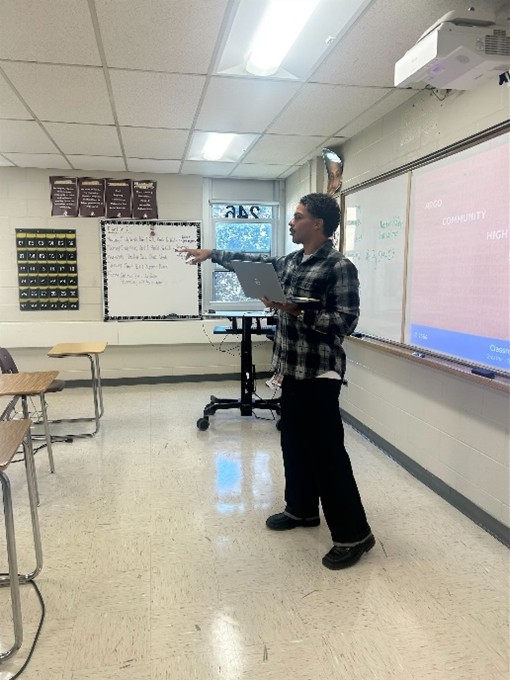
Assistant Humanities division chair, Bryan McCormack, shared another perspective.
“When it comes to attention, there’s a lot of discussion over whether or not our ability to pay attention is decreasing,” said McCormack.
McCormack expanded on this idea further, sharing an overview on why attention spans might be of concern.
“I think the simplest way to look at [attention spans] is that it’s not that we can pay attention less, it’s that the world is more distracting now than it was 20 or 15 years ago,” said McCormack.
But what is the reason behind this phenomenon?
“It coincides with the smartphone explosion around 2014,” McCormack said. “Around the same time, schools began issuing devices to students.”
McCormack provided a solution that educators can follow to address the core issue.
“If [teachers] can minimize the things that potentially distract you, then ideally you learn and retain more of the class, or the information is more interesting and engaging,” said McCormack.